


Erosion Control
Reinforcing Nature’s Defense: Advanced Netting Solutions for Erosion Control.
Sustainable & High-Performance Netting & Yarn Solutions for Effective Erosion Control
Our erosion control netting solutions provide flexible containment and protection to keep soil erosion in check. Conwed is a leading manufacturer of apertured extruded netting used as critical components in rolled erosion control products (RECPs) – including Erosion Control Blankets (ECBs), Turf Reinforcement Mats (TRMs), and Sediment Retention Fiber Rolls (SRFRs or “wattles”).
We supply the durable plastic meshes and synthetic fibers that erosion control product manufacturers rely on to reinforce their blankets, mats, and rolls. Now, we are proud to offer Naconet™ – a compostable extruded netting option that delivers the same strength and reliable performance as conventional plastic netting, with the added benefit of compostability.
In short, Conwed’s portfolio covers everything from standard polypropylene netting to cutting-edge bio-based netting for sustainable erosion control.
As an active member of the International Erosion Control Association (IECA) www.ieca.org and the Erosion Control Technology Council (ECTC) www.ectc.org, Conwed stays at the forefront of industry best practices and emerging standards, ensuring our solutions meet the needs of modern erosion control projects in the USA, Europe, and worldwide.
What is Erosion Control?
Erosion control is the practice of preventing or controlling the removal of soil by wind or water in land development, construction, agriculture, and other environments. Typically, vegetation (such as grass or wildflowers) and erosion control materials (like straw, wood fiber, mulch, or protective blankets) are placed on disturbed soil to stabilize it, reduce runoff and soil loss, and prevent sediment pollution in waterways.
In many cases, additional structural support like netting is used to hold these materials or vegetation in place on slopes and embankments until the area is naturally re-vegetated and stable. Effective erosion control protects landscapes against washouts, preserves topsoil, and guards water quality by keeping sediment where it belongs.
.
Why Choose Conwed for Erosion Control Solutions?
-
- Decades of Expertise – Trusted partner in erosion control netting and RECP components
-
Global Reach – Manufacturing in the USA and Europe for consistent supply and reduced emissions
-
Sustainability – Compostable netting solutions available with Naconet™
-
Engineered Performance – Precision-designed netting for strength, UV resistance, and durability
-
Industry Partnerships – Active member of IECA and ECTC, aligned with best practices and standards
-
Custom Solutions – Tailored netting configurations for specific project needs and specs
-
Reliable Logistics – Scalable production and responsive support for large infrastructure projects
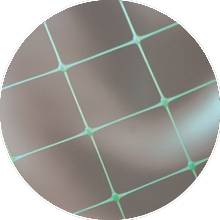
Erosion Control Blanket (ECB) Netting
We manufacture light-weight extruded nets that act as the containment layer in rolled erosion control blankets. The netting is typically applied to one or both sides of a blanket made of straw, wood excelsior, coconut coir, or other fibers, holding those fibers in place.
Conwed’s ECB netting is engineered to perform for the functional life of the blanket, providing stability during germination and early growth of vegetation. For temporary erosion control applications, we offer both standard photodegradable plastic mesh and fully compostable Naconet™ mesh that will break down along with the blanket material once vegetation is established. These nettings prevent soil loss during the critical establishment period and then disappear, leaving no debris.

Naconet™ Compostable Erosion Control Blanket Netting
Naconet™ is Conwed’s next-generation, bio-based extruded netting designed for erosion control applications where sustainability is a top priority.
Engineered to match the performance of traditional plastic netting, Naconet™ provides the necessary containment and reinforcement in erosion control blankets (ECBs), turf reinforcement mats (TRMs), and sediment retention fiber rolls (SRFRs or wattles). Made from renewable materials and certified to compostability standards, Naconet™ breaks down into natural elements like CO₂, water, and biomass after its service life – leaving no microplastics or synthetic residue behind. It offers consistent quality, smooth handling, and compatibility with standard manufacturing equipment, making it an ideal alternative to jute, coir, and other natural fibers.
Naconet™ supports vegetation establishment, protects soil during critical erosion phases, and eliminates the need for post-project cleanup – delivering high-performance erosion control with a low environmental footprint.
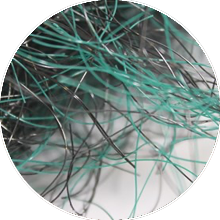
Conwed™ Multifilament Yarn for Turf Reinforcement Mats (TRMs)
TRMs are permanent, high-strength mats often used in channels, steep slopes, or high-flow areas where vegetation alone isn’t enough. Conwed supplies both the extruded netting and the synthetic fibers that go into many TRM products. Our Conwed™ multifilament yarn provides excellent loft and reinforcement within the mat, creating a thick vegetative root matrix for long-term erosion protection.
We also offer nettings for TRMs that secure the mat and withstand UV exposure over time. By using our polypropylene or bio-based netting in TRMs, manufacturers can ensure robust reinforcement that supports plant growth and endures in challenging conditions. (In permanent applications where long-term strength is needed, the netting remains in place indefinitely)
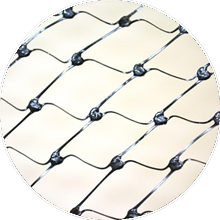
Sediment Retention Fiber Rolls (Wattles) Netting
Wattles (also called fiber rolls or sediment logs) are tubular bundles of fibrous material placed along contours or slopes to slow runoff and capture sediment.
Conwed produces both extruded and knitted netting used as the containment sleeve for these wattles. Our wattle netting is strong but also flexible, allowing the fiber roll to conform to the ground and intercept water flow without the net splitting. It provides the necessary tensile strength to hold the straw, coconut coir, wood fiber, or compost filler in place even in fast-flow or repeated wet/dry conditions.
Conwed’s wattle nets are available in quick-degrading forms for temporary sediment control and in longer-lasting polymers for extended field performance.

Erosion Control & Naconet™ – Frequently Asked Questions
Is Conwed netting approved for DOT and government-funded erosion control projects?
Yes. Conwed’s erosion control nettings are used in DOT-compliant products and meet specifications for temporary and permanent erosion control applications. Our products are suitable for highway embankments, roadside stabilization, and federally funded conservation and infrastructure projects.
How do I select the right erosion control netting for my project?
The best erosion control netting depends on your site conditions, project duration, and environmental goals. For temporary erosion control, choose photodegradable or compostable netting like Naconet™. For long-term or high-flow areas, opt for UV-stabilized polypropylene netting or TRM-grade netting with Conwed™ multifilament yarn for added reinforcement.
What is Naconet™ and how is it different from conventional erosion control netting?
Naconet™ is Conwed’s compostable erosion control netting, made from renewable bio-based materials instead of traditional oil-based plastics. It is designed to perform like conventional plastic netting (in terms of strength, flexibility, and erosion protection) but fully compostable after its use. Unlike standard polypropylene or polyester erosion control meshes, which can remain in the environment for years if left in place, Naconet™ will break down into natural substances (CO₂, water, organic biomass) under composting conditions.
This means no lingering plastic waste: no fragments, no microplastics, and no need to remove the netting from the field after the project. From a performance standpoint, you won’t notice a difference – Naconet™ nets stabilize soil and support vegetation just as effectively as the usual plastic versions. The difference is after the erosion control job is done: Naconet™ simply disappears harmlessly, whereas conventional nets would need to be pulled out or could cause long-term pollution if left in place.
In summary, Naconet™ gives you the erosion control results you need without the environmental downsides of plastic. It’s an advance in erosion control technology aimed at projects that prioritize sustainability.
Why choose Naconet™ over natural fiber netting like jute, coir, or hemp?
Your content goes here. Edit or remove this text inline or in the module Content settings. You can also style every aspect of this content in the module Design settings and even apply custom CSS to this text in the module Advanced settings.
Natural fiber erosion control blankets (made with jute, coir, straw, hemp, etc.) have been popular because they biodegrade eventually. However, they also come with some limitations that Naconet™ addresses. Firstly, consistency and strength: Naconet™ is an engineered product with uniform mesh size and predictable strength, so it won’t have weak spots or variability like woven jute or coir nets can. Each roll of Naconet™ netting performs reliably the same, which is critical for large projects where quality control matters. Natural fibers, being agricultural products, can vary in thickness or break down unevenly (for example, jute can sometimes rot too fast in very wet conditions, or persist too long in dry/cold conditions). Naconet™ offers a more controlled and customizable degradation rate to match the project’s vegetation establishment period.
Secondly, verified compostability: Naconet™ is certified to industrial composting standards, providing assurance that it will fully and safely decompose. Natural fiber mats are generally assumed to biodegrade, but they often include synthetic threading or backing and they lack third-party compostability certifications. With Naconet™, you have documented proof of its environmental compliance, which can help in getting approvals or meeting strict specs.
Thirdly, handling and installation: Naconet™ behaves much like plastic netting – it’s supple, lightweight, and runs smoothly through installation equipment. In contrast, natural fiber nets can be stiff or prone to snagging when deploying over large areas, especially by machine.
Also, Naconet™ doesn’t introduce any seeds, weeds, or unwanted organic matter to the site (coir and straw products sometimes carry bits of seed or plant material).
Finally, Naconet™ leaves nothing behind once decomposed – whereas even natural fibers can leave clumps of fiber or rope that take time to fully assimilate into soil.
In summary, Naconet™ gives you the eco-friendly benefits with the performance and reliability of a precision-made product. It’s an ideal choice when you want sustainability without uncertainty.
How long does Naconet™ last in the field, and does it need to be removed after use?
We offer Naconet™ in different grades that are engineered to stay intact for the duration of erosion control function – typically anywhere from around 6 months up to 18-24 months before fully breaking down. The exact longevity depends on environmental conditions (temperature, moisture, microbial activity) and the specific product configuration, but generally Naconet™ will hold its tensile strength through the critical erosion control period (until vegetation is well established or the temporary project phase is over) and then gradually disappears.
Because it is compostable, you do not need to remove Naconet™ netting after the project – in fact, avoiding retrieval is one of its major advantages. Once its job is done, it will naturally decompose on site. This eliminates the labor and cost of net removal that is often required with standard synthetic nets, and it means there’s no risk of stray leftover netting harming wildlife or equipment in the future.
In practical terms, you can treat Naconet™-reinforced blankets or wattles as leave-in-place solutions: install them, let nature do its work, and after time the netting will have vanished into the soil with no traces. (Do note that “compostable” means it breaks down under composting conditions; in very cold or arid settings, the timeline might be longer. But even then, it will eventually biodegrade given the presence of moisture and microbes – much faster than conventional plastics would, which essentially never biodegrade.)
In summary, Naconet™ will last as long as you need it, then it takes care of itself. No removal, no mess – truly “install and forget.”
Can Conwed erosion control nettings be sourced locally for U.S. and European projects?
Yes. Conwed manufactures erosion control netting in both the United States and Belgium, ensuring regional availability for North American and European markets.
This localized production reduces lead times, minimizes transportation emissions, and supports compliance with local sourcing requirements in public infrastructure and government-funded erosion control projects. It also ensures consistent product quality and supply chain reliability for large-scale deployments.
Sustainability Without Compromise: Naconet™ Delivers High Performance – Without Plastic
For decades, industries have faced a tough choice: stick with reliable plastic netting or try eco-friendly alternatives that might not hold up. What if you no longer had to choose between performance and sustainability? This question is at the heart of Naconet™,...
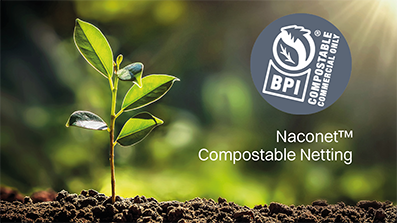
Introducing Naconet™: Our BPI Certified Compostable Netting Solution for a Plastic-Free Future
We’re excited to officially launch Naconet™ - a breakthrough in sustainable netting technology — and to share that it has received full certification from the Biodegradable Products Institute (BPI), confirming its compliance with the globally recognized ASTM D6400...
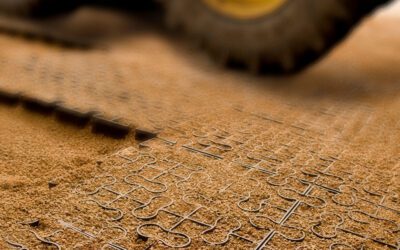
Reinforce Grass Surfaces with Durable Turf Stabilization Mesh
Grass & natural surfaces in high-traffic areas frequently experience wear and deterioration, resulting in muddy patches and soil erosion. Turf stabilization mesh provides an effective engineering solution for protecting and maintaining grass infrastructure. Our...

Inside Conwed: Bryan Hofmann on quality, needs & innovation of nettings in erosion control
Ever wondered what it take to build erosion control netting that performs in the toughest conditions? We sat down with one of our industry experts to discuss our innovative approach to netting solutions. Bryan provides insights into the development of products that...

Prepare for the upcoming harvest season- Customized netting solutions for agriculture
Harvest season brings both opportunity and challenge for agricultural operations. While it represents the culmination of months of hard work, it also demands maximum efficiency to protect valuable crops and minimize losses. High-quality agricultural netting has...

Inside Conwed: Andrew Topps, regional sales manager and expert for building & construction
In our latest interview, we chatted with Andrew Topps, regional sales manager for building and construction about customer collaborations, finding the right netting for each application and trends shaping the building & construction industry. Let's dive into the...
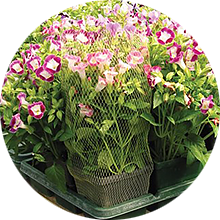
Garden and Nursery Netting
Our Conwed™ Nursery and Garden Netting helps contain and support plants and trees during all growth stages. It is strong and durable yet gentle on delicate stems, blossoms, and bark. This netting is widely used in nurseries and landscaping to protect saplings and shrubs, providing structure without harming the plants. It comes in various mesh sizes and configurations to suit different horticultural needs, from wrapping root balls to shielding flower beds.
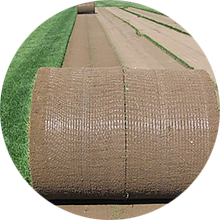
Soil Stabilization Grids and Turf Protection
Conwed offers a range of soil stabilization products and geosynthetic turf reinforcement systems that bolster the ground support for grass surfaces. For instance, plastic geogrids and meshes can be installed to distribute loads and prevent soil compaction in grassy areas subject to foot or vehicle traffic. These systems help maintain turf integrity and drainage in all weather conditions. Such products are ideal for reinforcing lawns, sports fields, or any vegetated ground that needs extra support to prevent rutting and erosion.
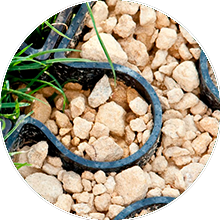
Paver Netting
Made from 100% recycled polyethylene, our Conwed™ Paver Netting (available in variants like Pavers 50 and Pavers 25) is an easy-to-use grid system for stabilizing gravel or soil under permeable pavers, driveways, parking areas, and walkways. The netting reinforces the base layer, preventing aggregate from shifting or settling while allowing water to permeate. The result is a more durable, rut-resistant surface for low-impact roads and paths. Conwed’s paver netting is an eco-friendly solution that leverages recycled materials to create long-lasting paved surfaces.
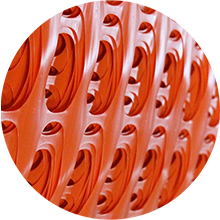
Safety & Construction Plastic Fencing
For construction sites, events, and agricultural use, Conwed produces high-visibility plastic fencing nets. These extruded mesh fences serve as lightweight, weather-proof barriers for applications such as construction safety fencing (warning and exclusion zones), snow fencing (to control drifting snow), crowd control barriers, and farm or garden fencing to contain animals or delineate areas. They are UV-stabilized for outdoor longevity and can be rolled up and reused. Compared to traditional metal fencing, plastic mesh fencing is easier to handle and won’t rust or corrode. Various mesh densities and strengths are available to meet the needs of different jobs.