


The Quest for Fast, Beautiful Lawns
In the residential and commercial landscaping world, time and quality are everything. Homeowners and facility managers want lush, green lawns immediately, not months down the road. To meet this demand, sod – pre-grown grass – has become the go-to solution, but even sod farming can take over a year for grass to mature naturally. Sod & turf netting has revolutionized this process.
By reinforcing sod with netting during production, turf growers can accelerate the growth cycle – delivering robust, ready-to-lay lawns to landscapers much faster. The result is a win-win: growers increase throughput and reduce costs, while landscapers and their clients benefit from quicker installations and resilient lawns that establish firmly.
Netting’s Role – From Sod Farm to Front Yard
What does turf netting actually do? It plays a key role at each critical step in sod’s journey. On the farm, a floor net is laid in the soil before planting grass seed. As the grass grows, its roots entangle with the mesh, forming a strong, unified sod layer. This reinforcement prevents the sod from falling apart when cut while still relatively young. Growers can harvest sooner – often in half the time vs. unnetted turf – because the net provides the structural integrity normally achieved by months of root growth.
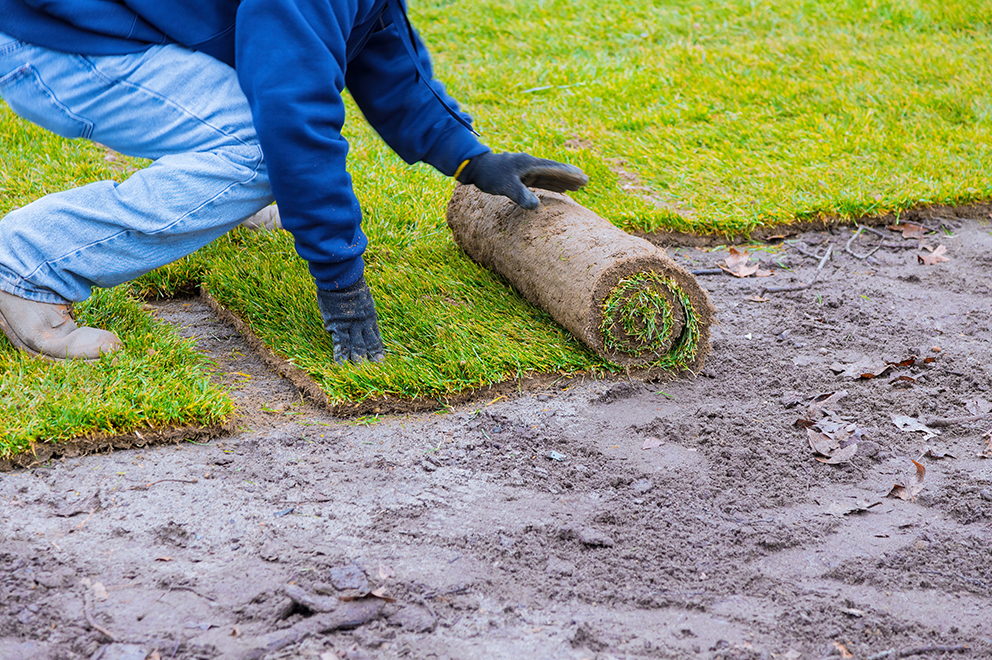
At harvest, some producers also use turf netting as a wrap for large sod rolls. This outer net keeps heavy rolls intact during transportation and delivery, protecting the product from damage due to handling or weather. When it’s time for installation, netting simplifies laying the sod. The underlying net prevents tears, so crews can unroll and position each strip quickly without it stretching or breaking apart. Compared to delicate turf tiles without netting, these can be installed much more quickly, resulting in considerable time savings during installation.
Overall, the net ensures that the sod reaches the site in excellent condition and goes down smoothly, making processes easier for landscapers and helping them meet tight deadlines.
Benefits of Sod Netting & How to Choose the Right Net
The advantages of using netted sod in landscaping are substantial:
- Speed & Efficiency: Faster harvest and installation are among the biggest benefits. Turf that normally takes 12–18 months to grow can be ready in 8–12 months with reinforcement netting, and large net-wrapped rolls allow rapid installation of huge lawn areas. This means contractors can complete projects quicker, take on more jobs, and reduce labor costs.
- Less Waste, Better Quality: With netting to support each roll, sod is far less prone to tearing or crumbling, so there’s minimal product waste during handling and laying. Landscapers get a consistent, high-quality sod that is easier to work with and establishes uniformly.
- Stronger Turf Establishment: The net remains under the sod as it roots, acting as a hidden skeleton that holds soil and grass together in the critical early weeks of watering and root growth. This means fewer gaps or failures in the new lawn – an important consideration for commercial clients who expect flawless results.
- Customization & Flexibility: Many netted sod solutions can be left in place permanently or removed during installation depending on the project needs. This flexibility is key: if end customers want no foreign material left in their soil, installers can peel off and dispose of the net as they lay the sod. If speed is the priority, they can leave it in, trusting it will settle invisibly in the root zone.
- Alternative Material Options: Conwed offers a range of turf reinforcement solutions to meet different project objectives and customer preferences. This includes Naconet™, a netting made from advanced biopolymers and certified by BPI to meet ASTM D6400 requirements for industrial compostability. Naconet™ expands the range of material options available to customers seeking alternatives to conventional plastic netting.
What to look for when choosing a sod netting
Performance Requirements: Select netting based on the needs of the application, including harvestability, installation conditions, durability requirements, and sustainability objectives. Conventional polypropylene netting provides long-term reinforcement, while Naconet™ provides certified industrial compostability for customers evaluating alternative reinforcement options.
Strength and mesh size are crucial – a high-quality extruded polypropylene or biopolymer net with a uniform mesh pattern will provide consistent support to the sod and lie flat without “tenting” or rippling. This improves the overall performance and appearance of the lawn.
Finally, partner with a reputable supplier; experienced netting manufacturers can guide you to the optimal net configuration for your grass type and local conditions, ensuring you get maximum benefit from the technology.
Beautiful Lawns, Smart Technology
From residential yards to city parks, net-reinforced sod has become a cornerstone of modern landscaping. It addresses the challenge of establishing a perfect lawn quickly and reliably, supercharging turf production and installation processes. By selecting the right netting, landscape professionals ensure their sod is easier to handle, more durable, and quicker to root, delivering lush lawns that impress clients and stand the test of time.
As customer expectations and project requirements continue to evolve, Conwed offers a range of turf reinforcement solutions to support different performance and material objectives. This includes Naconet™, our BPI-certified industrially compostable netting, which expands the range of options available to customers evaluating alternatives to conventional plastic netting while maintaining the performance required for sod production, harvest, and installation.
Are you ready to elevate your landscaping projects with cutting-edge sod netting? Contact Conwed today – our experts will help you find the ideal netting solution to save time, reduce waste, and grow your business.