


From the moment raw ingredients leave the field to the final packaged product on the shelf, netting and mesh materials play unseen but essential roles throughout food processing. These versatile materials improve efficiency, product protection, hygiene, and consistency, helping food manufacturers maintain high quality and throughput.
As a company that specializes in extruded netting solutions, we’ve built a broad portfolio of food-grade nets – all conforming to FDA and USDA standards – to serve nearly every step of the process.
Harvesting & Field Handling:
In agriculture and initial post-harvest handling, netting helps protect and transport fresh produce. Vented mesh bags or liners are used to hold picked fruits and vegetables, providing gentle containment and airflow to prevent bruising and spoilage. These nets are lightweight yet strong, making field collection and transfer to processing facilities more efficient while safeguarding product quality.
Washing, Rinsing & Dewatering:
At the start of processing, foods are washed and rinsed to remove dirt and contaminants. Mesh screens, drums, or bags allow thorough cleaning by letting water in and out freely. For instance, produce might tumble in a mesh barrel washer, where nets ensure effective cleaning and quick drainage. The open mesh structure offers excellent water flow and aeration, helping to dry products faster after rinsing and minimizing residual moisture before the next step.
Filtration, Separation & Sieving:
Netting and mesh materials act as filter material and sieves in many food processes. Whether straining liquids like juices or separating fine solids from sauces, food-safe polymer mesh provides a durable, sanitary, and easily cleanable filtering surface.
In dairy processing, for example, fine mesh may be used to separate curds from whey. Whereas in beverage production or brewing, polypropylene mesh filters can trap particulates while withstanding repeated use. Mesh screens maintain flow and purity without introducing fibers or contaminants, unlike some cloth or metal alternatives.
Conveying, Transport & Handling:
Throughout processing lines, netting improves conveying and handling. Mesh belts and liners on conveyor systems provide grip and ventilation, ideal for sticky or wet foods that need airflow as they move along. In meat and seafood plants, plastic mesh trays are used to hold products as they move through washing or icing stages, allowing cold water or air to circulate. Because they are non-corroding and easy to sanitize, these net-based components keep production hygienic and efficient.
Sorting, Grading & Sizing:
For certain fruits, vegetables, or processed foods, netting assists in sorting and grading by size or weight. Modular mesh panels or tumbling nets can gently separate items by allowing smaller pieces to fall through specific mesh openings. This ensures consistent sizing of products downstream. The flexibility and precision of engineered netting help maintain product uniformity without damaging delicate items.
Forming, Molding & Shaping:
Netting provides structural support during forming and molding of various foods. Elastic food-grade nets are commonly used to shape products like hams, roasts, or certain cheeses. These nets encase the product during curing or cooking, holding ingredients tightly together to ensure uniform shape and texture.
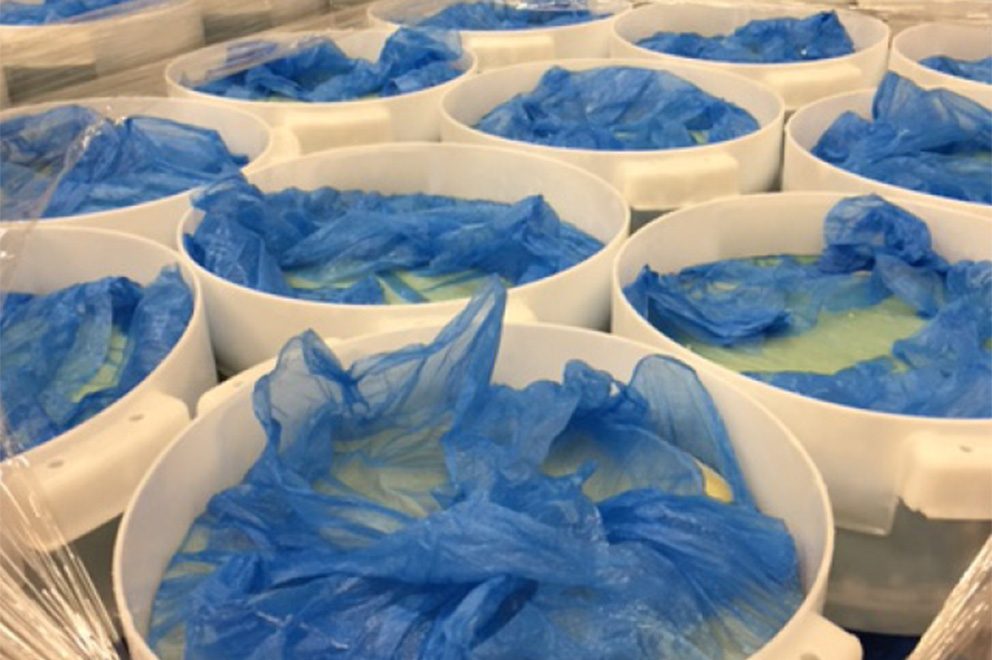
For example, a ham might be encased in a fine net during smoking to retain its round form and create an attractive surface pattern. In cheesemaking, plastic mesh molds or wraps can support curds as they set and age, allowing whey to drain and air to circulate for proper rind development.
Fermentation, Curing & Aging:
Some traditional processes like fermenting meat or curing cheeses benefit from netting’s support and breathability. Dry-cured sausages, for instance, may hang in mesh bags that support their weight while permitting airflow and moisture release.
Cheese ripening nets can cradle large cheese wheels or blocks, ensuring surfaces are exposed to air evenly and making it easier to handle them during long aging cycles. These specialized nets maintain product integrity as flavors and textures develop over time.
Cooling, Freezing & Thawing:
After cooking or during cold-chain steps, netting aids in rapid cooling and freezing. Products placed on mesh cooling racks chill faster because cold air can circulate on all sides. In blast freezers, using trays with net bottoms ensures quick, uniform freezing with minimal frost buildup on the product. When it’s time to thaw, those same net trays allow melted ice or condensate to drain away, preventing food from sitting in water. The result is improved product quality and reduced waste in frozen food handling.
Portioning & Batching:
Netting also helps with portion control and batching of food items. Flexible net bags or sleeves can hold a fixed quantity of items (like shellfish, produce, or candies) to make downstream portioning easier and more accurate.
For example, oyster processors often pack oysters in mesh bags of a set count – the mesh provides strength and constant ventilation, keeping the shellfish fresh and contained through processing and shipment. Similarly, netting is used in smokehouses to segment jerky pieces into batches, ensuring even exposure and simple post-process collection of each batch.
Packaging, Bagging & Containment:
One of the most visible uses of netting is in packaging of food products. Mesh bags for produce like onions, citrus fruits or potatoes are ubiquitous, allowing produce to breathe and are easily handled by both retailers and consumers. For meats and poultry, extruded netting can be integrated into packaging – such as net-reinforced vacuum bags or marination bags – to provide extra strength or shape retention.
In processed food packaging, net sheets or caps might secure products within their trays. Because netting is lightweight yet robust, it reduces material usage compared to solid plastics while still protecting the product.
Storage & Logistics:
In warehousing and distribution, netting contributes to safe storage. Pallet netting or wraps can stabilize stacked goods and improve ventilation in cold storage. Unlike stretch film, an elastic net wrap allows air exchange, important for items like produce that continue to respire after packaging.
Netting may also line storage bins or truck containers to cushion products and prevent shifting or abrasion during transit, effectively acting as a protective layer that ensures products arrive intact.
Protection, Lining & Process Safety:
Specialized nettings add safety and protective functions in food processing environments. Protective sleeve netting is used to cover sharp machine parts or bottle products to prevent damage and accidents.
Net liners can cover drainage openings or line equipment surfaces to catch debris and avoid system clogs. These applications show how netting provides an extra layer of safety and cleanliness, keeping processes running smoothly.
Broad Portfolio & Custom Solutions
The examples above illustrate how diverse netting and mesh materials support nearly every facet of food processing – improving efficiency, protecting quality, and ensuring hygiene from start to finish. Backed by decades of manufacturing expertise, Conwed offers a broad portfolio of standard netting grades for all these applications, each made from food-safe (FDA/USDA-compliant) polymers.
Just as importantly, we specialize in developing customized netting solutions to meet unique processing challenges. Together with partners and suppliers, we tailor mesh designs to optimize specific steps or to integrate seamlessly into new equipment. Whether it’s enhancing airflow during drying or crafting a novel packaging containment, our team’s knowledge and capabilities make us a trusted partner for netting innovation in food processing.
Together, we ensure that from field to package, every step is supported by the right netting – delivering safer, smarter, and more productive food processing operations.