


The Challenge: Bird Pressure on Crops
For fruit, berry, and vegetable growers worldwide, birds are a persistent and costly challenge. They feed on ripening crops, often causing 5–10% yield losses, with even higher impacts in high‑value produce. Beyond volume loss, birds damage reduces quality: pecked fruit is frequently unsellable and accelerates rot, increasing food waste.
At the same time, farmers face regulatory constraints. In many regions, wild birds are protected by law, limiting or prohibiting lethal control methods. Common scare tactics – noise cannons, visual deterrents, or reflective devices – may offer short-term relief but often lose effectiveness as birds adapt. This combination of economic pressure and legal limitation makes reliable, compliant crop protection essential.
Bird Netting as the Solution
Bird netting is widely recognized as the most dependable way to protect crops from bird damage. Instead of relying on deterrence, netting provides physical exclusion, preventing birds from reaching fruit altogether. Once installed, it works continuously – day and night, throughout the entire ripening period – without harming birds or crops.
For orchards, vineyards, and berry fields, netting has become a standard solution because it is predictable, scalable, and compliant with wildlife protection regulations. Growers who adopt netting often report immediate improvements in harvest quality and consistency.
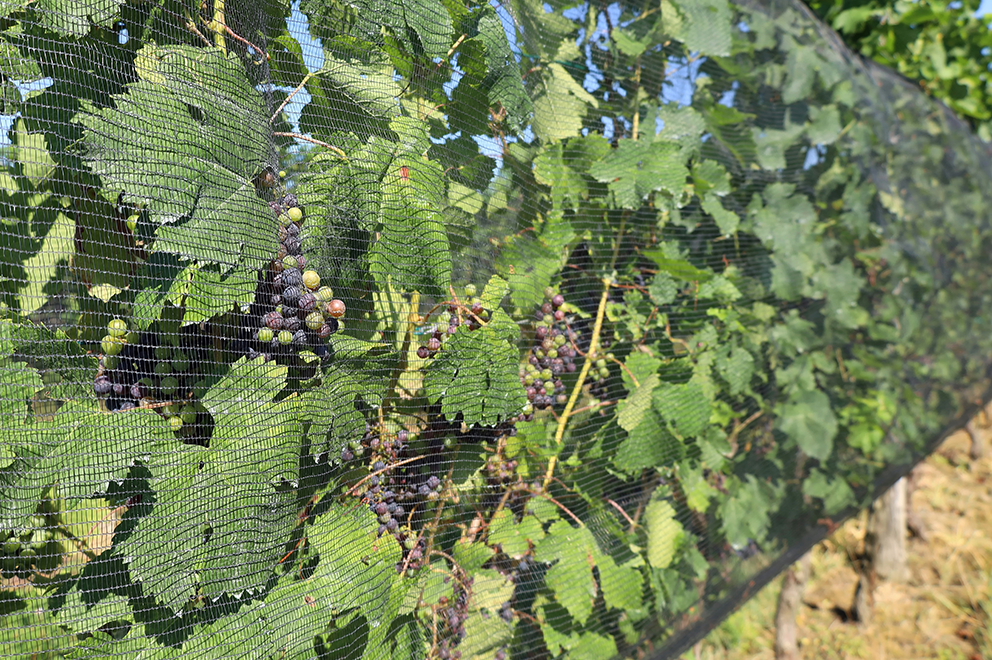
How Bird Netting Works
Crop protection netting is typically installed over trees, vines, or crop rows using support poles, cables, or frames. The mesh creates a barrier that blocks birds while still allowing sunlight, airflow, and rainfall to reach the plants. Nets are usually installed shortly before fruit begins to ripen and removed after harvest for reuse.
Conwed™ bird and animal protection netting is engineered using extruded plastic mesh technology, producing lightweight yet strong netting with uniform openings. This design allows large areas to be covered efficiently while minimizing stress on plants and support structures. Once birds learn they cannot access the crop, pressure on the protected area decreases further.
Key Benefits for Growers
- Higher marketable yields: By preventing bird access, growers recover fruit that would otherwise be lost or downgraded.
- Improved quality: Intact fruit means better appearance, longer shelf life, and higher pack‑out rates.
- Strong ROI: Although netting requires upfront investment, saved yield often offsets costs within a few seasons – especially in high‑value crops.
- Reliability: Unlike scare tactics, netting does not lose effectiveness over time.
- Regulatory compliance: Netting is non‑lethal and aligns with wildlife protection laws.
- Sustainability: Sustainable nettings offer a solutions .
What to Look for When Selecting Netting
When choosing bird netting, growers should consider:
- Mesh size: Depending on the crop and type of birds there are different nettings.
- Material & durability: UV‑stabilized polyethylene or polypropylene for multi‑season use.
- Strength & handling: Lightweight netting with high tensile strength for easy installation and reuse.
- Installation method: Individual trees, row systems, or full‑block enclosures require different configurations.
Conwed™ Solutions and a Sustainable Option
Conwed™ offers a broad range of durable, lightweight crop protection netting in multiple mesh sizes, weights, and formats – designed for easy installation and long service life.
For growers seeking a more sustainable alternative, Naconet™ provides a 100% bio‑based, industrially compostable netting that delivers plastic‑like performance while eliminating long‑term plastic waste.
Bird netting is a proven, future‑ready solution for protecting crops. With Conwed™ netting solutions, growers can safeguard yields, maintain quality, and meet sustainability and compliance goals with confidence.